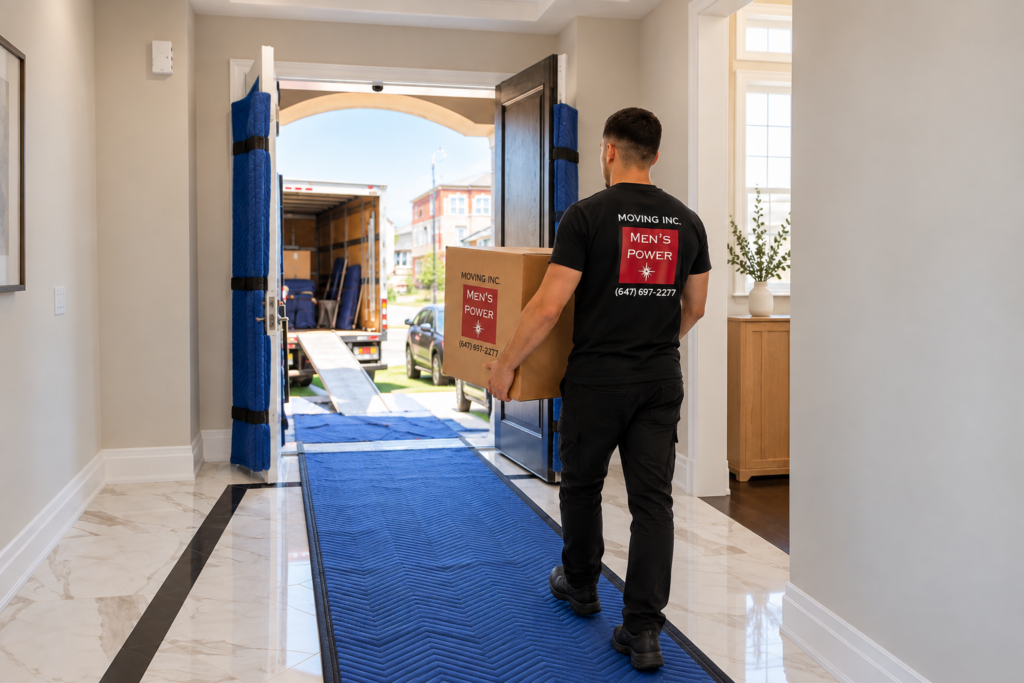
Moving into a new home is an exciting experience, but it also comes with an important concern: how do you move heavy furniture, appliances, and dozens of boxes without damaging the property?
Whether you are leaving a condo in downtown Toronto, moving into a newly built house in Vaughan, or relocating to a luxury home in Richmond Hill, protecting the property is just as important as transporting your belongings safely.
Hardwood floors, freshly painted walls, marble surfaces, staircases, door frames, and custom finishes can all be vulnerable during a move. A single heavy piece of furniture, an unprotected doorway, or equipment used incorrectly can leave scratches, dents, or other damage that may be expensive to repair.
This is particularly important in homes with premium finishes. Natural stone flooring, custom woodwork, glass railings, and delicate architectural details often require additional attention when large or heavy items are being moved through the property.
Professional moving is not simply about carrying furniture from one location to another. It also involves understanding the layout of the property, identifying areas that require protection, selecting appropriate moving equipment, and planning how belongings will be transported through the home.
At Men’s Power Movers Inc., we understand that customers are trusting us with more than their furniture. They are also trusting us with the condition of the homes they are leaving and the properties they are moving into.
In this guide, we will explain how professional movers protect floors, walls, staircases, doorways, and other vulnerable areas during a residential move. We will also discuss the different types of protective materials, the challenges presented by certain home finishes, and the steps homeowners can take to help reduce the risk of property damage on moving day.
Protecting the Home Starts Before the First Item Is Moved
Home protection should begin before the first box or piece of furniture leaves the room. One of the first things an experienced moving crew should do is understand how belongings will travel through the property.
The most direct route is not always the safest one. Movers need to consider the width of hallways, turns, stairs, doorways, ceiling height, and the amount of space available for carrying larger items. A route that works easily for boxes may not be suitable for a sofa, dining table, mattress, or large dresser.
The crew should also notice areas where damage is more likely to occur. Tight corners, narrow entrances, low ceilings above staircases, glass doors, decorative trim, and areas where several people need to turn while carrying furniture may require additional attention.
Small obstacles can create unnecessary risks as well. Rugs that can slide, shoes near the entrance, decorative objects, plants, floor lamps, children’s toys, and other items along the moving path should be removed before heavy furniture begins moving through the home. A clear route gives movers more room to work and reduces the chance of someone tripping while carrying an item.
The location of the moving truck also matters. The shorter and clearer the path between the home and the truck, the easier it is to maintain control of furniture and boxes. Long carries, stairs, uneven driveways, narrow walkways, and limited parking can all affect how the crew organizes the move.
At the delivery address, this assessment begins again. The new home has its own layout and potential problem areas, so the crew may need to adjust the unloading plan rather than simply reversing the process used at the original property.
Taking a few minutes to evaluate both properties can prevent many avoidable problems later. Protecting a home is much easier when potential risks are identified before hundreds of boxes and pieces of furniture begin moving through the space.
How Professional Movers Protect Hardwood and Other Flooring
Floors are one of the areas most exposed to damage during a move. Movers may walk in and out of a home hundreds of times while carrying boxes, furniture, and equipment, so even a small amount of dirt or debris can become a problem. Hardwood, laminate, tile, and other finished surfaces can all be affected in different ways.
Hardwood floors require particular care because scratches can occur when small pieces of gravel, sand, or other debris are trapped under shoes or moving equipment. Heavy furniture should never simply be dragged across a finished floor. Even items that appear easy to slide can leave scratches, dents, or marks that are difficult and expensive to repair.
Depending on the property and the conditions on moving day, protective floor coverings can be placed along frequently used paths. These create a barrier between the flooring and the constant traffic moving between the home and the truck. Special attention may be needed near entrances, hallways, and areas where furniture is being turned or repositioned.
Weather makes floor protection even more important. On rainy or snowy days in Toronto and the GTA, moisture, mud, and road salt can quickly be carried into a home. Salt and grit are particularly problematic because they can spread well beyond the entrance as movers continue walking through the property.
Tile and stone floors present different concerns. Although these surfaces may be more resistant to scratches than some hardwood floors, heavy objects can still cause chips or cracks if they are dropped or handled incorrectly. Natural stone and other high-end finishes may also require additional care.
Protecting flooring is not only about placing material on the ground. Careful lifting, controlled movement, keeping pathways clean, and using appropriate moving equipment all contribute to reducing the risk of damage.
This becomes especially important when moving into a newly built or recently renovated home. New hardwood, polished surfaces, and finished flooring are often significant investments, and protecting them should be part of the moving plan rather than something considered only after the move has already started.
How Professional Movers Protect Walls and Corners
Walls and corners are especially vulnerable during a move because large furniture often has to pass through spaces with very little clearance. Sofas, dressers, tables, mattresses, and other bulky items can easily touch a wall when they are being turned through a hallway or positioned near a doorway.
The risk is greater in narrow hallways and tight corners where movers have limited space to change the angle of an item. Even when furniture is not particularly heavy, one unexpected movement can leave a scuff, dent, or scratch on a painted surface.
Professional movers reduce this risk by controlling the movement of large items rather than rushing through difficult areas. Communication between crew members is important, especially when one mover cannot clearly see the wall or corner behind the furniture. Moving slowly through tight spaces gives the crew time to adjust the position of the item before contact occurs.
Furniture protection also helps protect the home itself. When appropriate, moving blankets or other protective materials can be secured around furniture before it is carried through the property. This creates an additional barrier between hard furniture edges and finished surfaces.
Certain areas may require extra attention, including freshly painted walls, decorative wall panels, custom trim, exposed corners, and narrow passages. In newly renovated homes, even a small mark can be particularly noticeable because the surrounding surfaces are new.
Wall protection becomes even more important when large items must be rotated or temporarily repositioned inside a hallway. Movers need enough working space not only for the furniture itself but also for the people carrying it.
Preventing wall damage is therefore largely about preparation, communication, and controlled movement. Identifying difficult areas before large furniture reaches them allows the moving crew to choose the safest approach instead of trying to solve the problem while holding a heavy item in a confined space.
How Professional Movers Protect Doors and Door Frames
Doors and door frames are another common risk area during a move. Almost every large piece of furniture has to pass through at least one doorway, and the available clearance can sometimes be only a few centimetres wider than the item being carried.
Damage often happens when the corner of a sofa, table, dresser, or bed frame catches the side of the doorway. Painted trim can be scratched or chipped, and repeated contact can leave visible marks on both the frame and the furniture.
Before carrying a large item through a tight doorway, professional movers should check the available space and determine the best angle for moving it through. Sometimes simply changing the orientation of the furniture creates enough clearance. In other situations, removable furniture parts such as legs, shelves, or handles may need to be taken off first.
The door itself can also reduce the amount of usable space. If necessary and appropriate, a door may sometimes be temporarily removed from its hinges to create additional clearance. This should be done carefully, with the door and hardware kept in a safe location until they can be reinstalled.
Glass doors require additional caution. Patio doors, interior glass panels, and decorative entrances can be particularly vulnerable because even minor contact with a heavy object can result in expensive damage. Movers need to understand where glass surfaces are located and maintain enough distance from them while maneuvering furniture.
Doorways also tend to become high-traffic areas during a move. Boxes, dollies, furniture, and moving equipment may pass through the same entrance repeatedly throughout the day. Keeping these areas clear and avoiding unnecessary congestion makes it easier for movers to maintain control of what they are carrying.
Careful planning around doors and frames is especially important when moving into a newly built or renovated property. New trim, fresh paint, custom doors, and finished entrances can be costly to repair. Taking the time to assess each difficult doorway before moving a large item through it can prevent damage that would otherwise take much longer to fix.
How Professional Movers Protect Stairs and Railings
Staircases are one of the most challenging areas to protect during a move. Unlike an open hallway, stairs give movers limited room to change direction, and large furniture often needs to be tilted, lifted, or rotated while being carried between floors.
The edges and surface of the stairs can be vulnerable to scratches, dents, and marks, particularly when the staircase is finished with hardwood. Depending on the property and the type of staircase, protective coverings may be used in high-traffic areas to reduce direct contact with shoes, equipment, and furniture.
Railings and banisters require special attention as well. They are often positioned exactly where movers need additional space to maneuver a large item. A heavy dresser, bed frame, or sofa can damage a railing if the furniture is allowed to rest against it or if an item suddenly shifts while being carried.
For this reason, professional movers should evaluate the staircase before attempting to carry particularly large or heavy furniture upstairs or downstairs. The width of the stairs is only one consideration. Ceiling height, landings, turns, railings, light fixtures, and the amount of space available at the top and bottom of the staircase can all affect how an item should be handled.
Communication between movers becomes especially important on stairs. The person carrying the lower end of a large item may have a completely different view from the person above. Both movers need to coordinate their movements so that the furniture remains controlled throughout the entire staircase.
Some staircases require additional planning because of their design. Curved stairs, narrow townhouse staircases, finished wooden steps, and stairways with tight landings can make certain pieces of furniture considerably more difficult to move than they initially appear.
If an item cannot be moved safely through the staircase, forcing it is not a good solution. The crew may need to reconsider its orientation, remove detachable components, or determine whether another access route is available.
Protecting stairs and railings is therefore closely connected to proper planning and handling. A few extra minutes spent evaluating a difficult staircase can help prevent damage to the property, the furniture, and the people carrying it.
Protecting Your Home From Rain, Snow, Mud, and Road Salt
Weather can create additional challenges during a move, especially in Toronto and the GTA, where conditions can change quickly. Rain, snow, slush, and road salt can all be carried into a home as movers repeatedly travel between the property and the moving truck.
The entrance usually requires the most attention because this is where outdoor moisture and debris first enter the home. Without proper preparation, wet shoes can leave water and dirt on flooring, while small pieces of salt or gravel can be tracked farther into hallways and other rooms.
Road salt can be particularly troublesome during an Ontario winter. It may leave visible residue on finished floors, and small particles trapped under shoes or equipment can contribute to scratching. Snow and slush also create slippery surfaces, which can make carrying heavy furniture more difficult.
Protective floor coverings can help create a designated pathway through high-traffic areas. The type of protection used should be appropriate for the flooring underneath and should remain secure while movers walk across it. A covering that shifts or creates a tripping hazard can cause a different problem instead of solving one.
Keeping the moving route reasonably clean throughout the day is also important. If excessive water, mud, or debris begins accumulating near an entrance, it may need to be addressed before it spreads farther into the property.
Weather protection is important at both addresses. Even if the home being left has older flooring, the destination may have brand-new hardwood, tile, or other finishes. The same precautions should therefore be considered during both loading and unloading.
Homeowners can also help by making sure outdoor walkways, steps, and driveways are reasonably clear before the movers arrive. During winter, removing snow and treating slippery areas can create a safer path between the truck and the entrance.
A professional move cannot control the weather, but it can be organized around it. Preparing for outdoor conditions before the first item enters or leaves the home helps protect interior surfaces and creates a safer working environment throughout the moving day.
Protecting Elevators, Hallways, and Common Areas in Condos
Condo moves require a different type of property protection because the moving route usually extends far beyond the individual unit. Furniture and boxes may need to travel through hallways, elevators, lobbies, loading areas, and other shared spaces before reaching the moving truck.
Many condominium buildings in Toronto and the GTA have specific moving procedures designed to protect these common areas. Residents may be required to reserve a service elevator, use a designated entrance, schedule the move during approved hours, or arrange for elevator protection through building management.
Service elevators are often prepared with protective padding before a move begins. This helps protect elevator walls from furniture, dollies, boxes, and other equipment. Movers still need to load the elevator carefully because overcrowding can make it difficult to control large items when the doors open.
Condo hallways also require attention. Long pieces of furniture may be easy to carry inside an apartment but much harder to maneuver around corners outside the unit. Movers need to consider hallway width, door locations, wall fixtures, lighting, and the space available near the elevator.
Lobby areas and finished common spaces can contain tile, stone, glass, decorative walls, and other surfaces that are expensive to repair. Moving crews should follow the building’s designated route rather than choosing a shorter path that has not been approved for moving activities.
Another important consideration is the distance between the service elevator and the moving truck. In some Toronto condos, the loading area is close to the elevator. In others, movers may have a considerable distance to travel through underground parking, loading docks, or exterior walkways. This can affect both the organization and timing of the move.
Before moving day, condo residents should confirm the building’s requirements with property management. Knowing where the truck can park, which elevator will be used, what protection the building provides, and whether there are specific moving hours can prevent delays after the crew arrives.
Protecting a condo during a move means respecting both the private unit and the shared property around it. Good coordination between the resident, building management, and moving company helps make the process safer and reduces the risk of damage to areas used by everyone in the building.
Protecting a Newly Built or Recently Renovated Home
Moving into a newly built or recently renovated home requires additional care. New hardwood floors, freshly painted walls, custom cabinetry, finished staircases, new doors, and decorative trim can represent a significant investment, and even a small scratch or dent may be immediately noticeable.
One of the most important considerations is whether all renovation work is actually complete before moving begins. Contractors may still be finishing paint, installing trim, adjusting doors, or completing other small jobs. If movers and contractors are working in the same areas at the same time, the property can quickly become crowded and the risk of accidental damage increases.
Freshly painted surfaces deserve particular attention. Paint that feels dry to the touch may still be more vulnerable to marks or pressure than a fully cured finish. Large furniture should be kept away from walls whenever possible rather than being leaned against them while rooms are being organized.
New flooring also needs careful handling. Construction dust, small pieces of debris, and material left behind after renovations can scratch finished surfaces when people begin walking through the home. Before moving day, the main pathways should be clean and free of leftover construction materials.
It is also helpful to decide where large furniture will go before it enters the property. Moving a heavy dining table, sectional sofa, or dresser into a room and then repeatedly repositioning it creates unnecessary contact with floors and walls. A clear furniture plan allows movers to place larger items closer to their final locations the first time.
Homeowners should tell the moving company in advance if the destination is newly built or has recently undergone major renovations. This gives the crew useful information about the condition of the property and areas that may require additional attention.
A new or renovated home should not look like a moving site after the truck leaves. Careful preparation, clean access routes, controlled furniture placement, and appropriate surface protection can help preserve the finishes that homeowners have invested in before they even spend their first night in the property.
Protecting Furniture Helps Protect the Home Too
Protecting furniture and protecting the property are closely connected. A large piece of furniture with exposed corners, metal components, or hard wooden edges can damage walls, floors, doors, and railings if it comes into direct contact with them during the move.
Moving blankets are commonly used to create a protective layer around furniture. Depending on the item, blankets can cover finished wood, glass components, corners, and other surfaces that could be damaged during transportation. They also provide cushioning if the furniture accidentally comes close to a wall or doorway while being carried.
Stretch wrap may be used to help keep protective blankets in position and to secure certain furniture components. Drawers, doors, or other movable parts should not suddenly open while an item is being carried through a hallway or down a staircase. Keeping the furniture compact and controlled makes it easier for movers to handle safely.
Sharp or protruding components deserve particular attention. Table legs, bed frame parts, handles, decorative edges, and other projections can easily catch a wall or door frame. In some cases, removing these components before the item is moved can make transportation safer for both the furniture and the property.
Proper protection also gives movers a better surface to hold when handling certain items. A well-prepared piece of furniture can often be carried and maneuvered more predictably than an item with loose doors, moving drawers, or exposed fragile components.
However, wrapping furniture does not replace careful handling. Even a heavily protected item can damage a wall or railing if it is forced through an area without enough clearance. Protective materials work best when they are combined with proper lifting techniques, communication between movers, and a realistic assessment of the available space.
Preparing furniture correctly before it begins moving through the home therefore serves two purposes. It helps the item arrive safely at its destination, and it reduces the chance that the furniture itself will become the cause of damage to the property along the way.
What Homeowners Can Do Before the Movers Arrive
Professional movers play an important role in protecting a property, but homeowners can also make moving day safer by preparing the home before the crew arrives. A few simple steps can reduce unnecessary obstacles and give movers more space to work.
Start by clearing the main moving routes. Hallways, entrances, staircases, and areas around doors should be free from shoes, boxes, toys, plants, small furniture, and decorative items. Movers carrying a large sofa or dresser may not be able to see objects directly in front of their feet, so a clear pathway is important for both safety and property protection.
Small rugs and runners may also need attention. If they are not secured and are likely to slide, they can become a tripping hazard when movers are carrying heavy items. Ask the moving crew whether they prefer these rugs to be removed before work begins.
Wall decorations located along busy moving routes should be considered as well. Pictures, mirrors, artwork, and decorative objects near narrow hallways or staircases may be safer if they are removed in advance, particularly when large furniture must pass close to the walls.
If there are areas of the home that require special care, point them out when the crew arrives. This could include recently refinished hardwood, freshly painted walls, delicate tile, custom millwork, glass panels, or a staircase that was recently renovated. Movers cannot always know which surfaces are new or particularly valuable simply by looking at them.
Homeowners should also decide which rooms or areas movers do not need to enter. Keeping unnecessary spaces closed can reduce traffic through the property and make the moving process more organized.
Outside the home, make sure the path between the entrance and the moving truck is reasonably clear. Garden hoses, bicycles, garbage bins, snow, ice, and other obstacles can make carrying furniture more difficult and increase the risk of an accident.
Preparation does not mean homeowners need to protect every surface themselves before the moving company arrives. The goal is to remove avoidable obstacles and communicate anything unusual about the property. When the homeowner and moving crew both understand the conditions of the home, it becomes much easier to plan a safe and efficient move.
Why Rushing Increases the Risk of Property Damage
A moving day often has a busy schedule, but trying to save time by rushing large or heavy items through a home can create unnecessary risks. Careful movement is especially important in areas where there is little room for error.
When movers approach a narrow doorway, staircase, or tight corner, they may need to stop and reposition the item before continuing. This does not necessarily mean that something has gone wrong. Taking a moment to adjust the angle of a sofa, change hand positions, or confirm the next movement can prevent contact with walls, railings, doors, and other finished surfaces.
The same principle applies when furniture needs to be placed in a specific location at the destination. Carrying an item into the correct room and positioning it carefully may take slightly longer than simply leaving it near the entrance, but it can reduce unnecessary movement later.
Good communication within the moving crew is particularly important when several people are handling one item. One mover may be walking backward, another may be guiding the furniture around a corner, and someone else may be watching the available clearance. Clear communication helps everyone move together rather than reacting after the furniture has already shifted.
Customers can help by allowing the crew enough space to work. Crowded hallways and several people giving directions at the same time can make difficult maneuvers more complicated. When an item requires careful handling, the movers need to be able to see the route and communicate with each other.
Professional moving is not about carrying every item as quickly as possible. Efficiency comes from organization, experience, and controlled movement. Taking a little more time in the most difficult areas of a property can prevent damage that would take far more time and money to repair after the move.
What to Discuss With Your Moving Company Before Moving Day
Protecting a home becomes much easier when the moving company knows about potential challenges before the crew arrives. When requesting a quote or confirming the move, customers should mention anything about the property that may require additional planning.
This is especially important if the home has newly installed hardwood floors, recently painted walls, custom staircases, delicate stone or tile, glass features, or other finishes that require extra care. Photos can be helpful when there are narrow entrances, unusual staircases, tight turns, or particularly large pieces of furniture.
The moving company should also know about access conditions. Long driveways, limited street parking, underground loading areas, multiple flights of stairs, service elevators, and long distances between the truck and the entrance can all affect how the move is organized.
For condo moves, customers should confirm building requirements before moving day and communicate them to the moving company. Elevator reservations, loading dock access, approved moving hours, and building protection requirements can affect when and how the crew is able to work.
It is also important to identify unusually heavy, oversized, or fragile items in advance. A large marble table, safe, oversized sectional, heavy solid-wood furniture, or other specialty item may require different equipment, additional movers, or a specific plan for moving it safely through the property.
Providing this information does not need to make the booking process complicated. A few accurate details and photos can help the moving company understand the property before moving day and arrive better prepared for the conditions they will encounter.
Good communication before the move allows both the customer and the moving crew to focus on preventing problems rather than solving unexpected ones after the truck has already arrived.
Final Thoughts
Protecting a home during a move requires more than simply being careful with furniture. Floors, walls, doors, staircases, railings, elevators, and other surfaces are all part of the moving environment and should be considered when planning how belongings will travel through the property.
Every home presents different challenges. A Toronto condo may require careful coordination with building management and elevator reservations, while a house in Vaughan, Richmond Hill, Markham, or another GTA community may have hardwood floors, finished staircases, narrow entrances, or recently renovated areas that need additional attention.
The best protection starts with preparation. Clear moving routes, appropriate protective materials, properly prepared furniture, good communication between crew members, and information from the homeowner can all help reduce the risk of accidental damage.
Customers can also make moving day easier by discussing unusual access conditions and delicate surfaces with their moving company in advance. Men’s Power Movers provides professional residential moving services throughout Toronto and the GTA and can plan the move according to the layout and access conditions of each property.
The Government of Ontario also recommends discussing the details of your move with the moving company in advance and making sure you understand the services included before signing an agreement.
A successful move is not only about getting every box and piece of furniture to the new address. It is also about leaving the old property in good condition and protecting the new home from the moment the first item comes through the door. Careful planning and professional handling can make that difference.